


Setting Up Email Server For Cron Mac
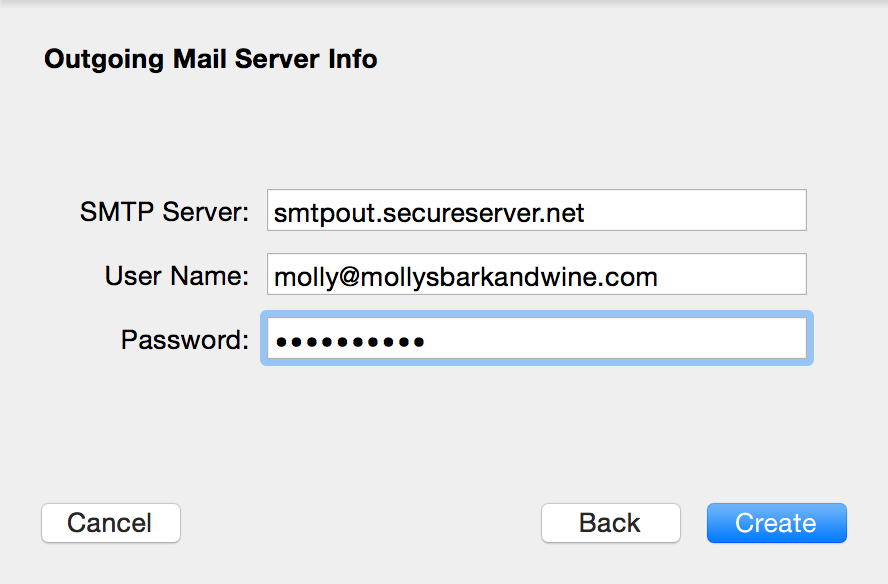
• If the page summarizing your server information is displayed, click Create and skip to. • If 'searching for mail servers.' Takes more than a minute, click Cancel and then click Continue. • For Account Type, select Exchange. Some versions of Mac OS X may see Exchange 2007. Note: El Capitan users may not see these screens. • Enter a description (such as 'UCSD Exchange') in the Description field.
We have a few great examples, too. Since Windows 95. The utility that does the same job on Linux is called cron, and here we’ll explain how to use it. What Is Cron?
Cron has an in-built email notification feature, but this requires setting up at least a simple local mail server How Does An Email Server Work? What is the max amount of memory upgrade for mac mini 2018. [Technology Explained] How Does An Email Server Work? [Technology Explained] Behind each email is a powerful engine called the email server which pushes the emails through the internet.
Dealing with Error Messages from Crontab If you receive an error message when you use ' crontab crontab.txt', you have probably made a mistake creating the crontab file. Here are the common mistakes: • You split your schedule/command line into more than one line. Every scheduled task must fit into a single line. Do not allow your text editor to wrap it to another line.
Because of its extensive features, support for 84 languages, and free price, Notepad++ was voted as the most used text editor worldwide with 34.7 percent of 26,086 respondents on Stack Overflow claiming to use it daily. Best document editor for mac. Why Is Notepad++ Mac Not Available? It has also won a number of prestigious awards including the “Best Programming Text Editor for Windows” award from Lifehacker in 2011 and 2014.
Advertisement Did you know that Blade Runner is set in 2019? That’s three years from now! Not to mention, where they time-travel forward into 2015. Yet we don’t have flying cars and there are no replicants among us (as far as I know).
Aside from getting rid of trash, this tool also boosts your RAM and optimizes your system, resulting in a faster and smoother performance. However, if the problem persists even after you have optimized your Mac and resolved possible issues, then it is highly probable that the problem really lies in your account settings. The default port for Mac Mail app is 1025.
Do You Really Have to Use the Terminal? Absolutely not. KDE users can schedule cron jobs with, which is accessible from the System Settings > Task Scheduler module.
Like suggested by my network admins, I would like have them sent to the root@localhost and not root@mydomain. How can I make sure that any mail intended for the root account on my local system be sent to root@localhost and not root@mydomain??? Testuser: Interesting about the lack of alias for root in NetInfo.
Twice a month or every 5 minutes. Go to the terminal and type: crontab -e This will open your personal crontab (cron configuration file). The first line in that file explains it all! In every line you can define one command to run and its schedule, and the format is quite simple when you get the hang of it.
With a straightforward interface that lets you choose and tweak everything in just a few mouse-clicks, KCron is a pleasure to use. If you prefer GNOME, then is for you. The approach is similar, although the interface is, expectedly, slightly different. It offers an advanced mode for fine-grained modifications, and comes with a panel applet from which you can manage tasks directly. You should be aware of other solutions, like.
Anything you do will be insecure without the use of ssh and sshd. The canonical way is to use scp or even better, rsync and an ssh key without a password. Alternatively, create a key used only for copy, and on the remote end edit the authorized_keys file to contain only the command(s) you need to run, and the key, e.g.: # remote_server:/home/copyuser/.ssh/authorized_keys: command='[.]' ssh-rsa KEY_HERE user@host There is also scponly available. If you create a user, set their shell in /etc/passwd to /usr/bin/scponly and they will not be allowed to login, but copy files in and out per the normal permissions. Here are my recommendations: • Create a specific set of SSH public/private keys for this cron job.
However, don't worry! It's normal for this to happen due to Media Temple's servers not having autodiscover settings enabled by default.
*/15 to run every 15 minutes). In the first job called bounces.php, I have this scheduled to run at 15 and 45 minutes past each hour. I could have scheduled the minutes as */30 to run every 30 minutes but I wanted to control at which minutes past each hour it ran.
You have finished the setup of your email account. Click Finish to close the Setup Wizard.
You will need to decide on what suits you best. The code I used is as follows: Options FollowSymLinks AllowOverride None AuthType Kerberos AuthName 'Kerberos logins only' KrbMethodNegotiate on KrbMethodK5Passwd off KrbAuthRealms HOME.DEEPPORT.NET KrbServiceName HTTP/zamek.home.deepport.net@HOME.DEEPPORT.NET Krb5Keytab /etc/apache2/krb5.keytab Require valid-user These options are: AuthType Kerberos Use Kerberos for authentication KrbMethodNegotiate on Enable the negotiate method for authentication KrbMethodK5Passwd off Disable Basic authentication allowing Kerberos tickets only. If you would like to allow your users to also be able to authenticate with a simple username and password dialog box set the to on.